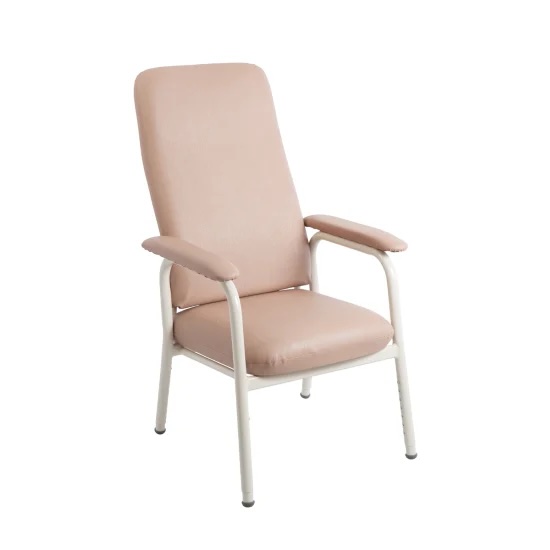
Day Chair
A day chair should be selected after assessment of transfers, posture, sitting balance, pain, skin risk, lower-limb position, body measurements, activities and the home environment. Trial the exact chair at the intended height, depth and backrest setting.
Overview
A day chair is a supportive upright chair designed for daytime sitting.
Common features include:
- Firm padded seat
- Supportive armrests
- Adjustable seat height
- Adjustable seat depth on selected models
- High or low backrest
- Vinyl or fabric upholstery
- Rear transport wheels
- Optional footstool
- Optional side table
A day chair is usually more upright and stable than a lounge chair.
Purpose
- Support upright sitting
- Improve sit-to-stand transfers
- Provide a firmer alternative to a lounge chair
- Support meals, reading, television and social activity
- Improve foot and arm support
- Reduce excessive sinking into soft seating
- Support carers during transfers
- Allow adjustment to suit the person’s measurements
Who May Benefit
A day chair may suit a person who:
- Has difficulty standing from a low or soft chair
- Requires a firmer seat
- Needs reliable armrests for transfers
- Has reduced lower-limb strength
- Has reduced endurance
- Needs a predictable upright sitting position
- Requires adjustable seat height or depth
- Needs a chair for meals or daytime activities
- Can maintain sitting safely without powered positioning
- Does not require complex tilt, recline or pressure management
When It May Not Be Suitable
A standard day chair may not be suitable when the person:
- Requires powered lift assistance
- Cannot maintain an upright sitting position
- Requires tilt-in-space
- Requires complex lateral or head support
- Has high pressure-injury risk not addressed by the chair and cushion
- Requires hoist access that the frame does not allow
- Slides forward repeatedly
- Cannot safely use the armrests
- Needs frequent recline
- Has severe pain in upright sitting
- Requires a custom seating system
Consider:
- Electric Recline Lift Chair
- Wheelchairs
- Cushions
- Specialist seating
High Back vs Low Back
Day chairs are commonly available in high-back and low-back styles. Each suits different needs.
High-Back Day Chair
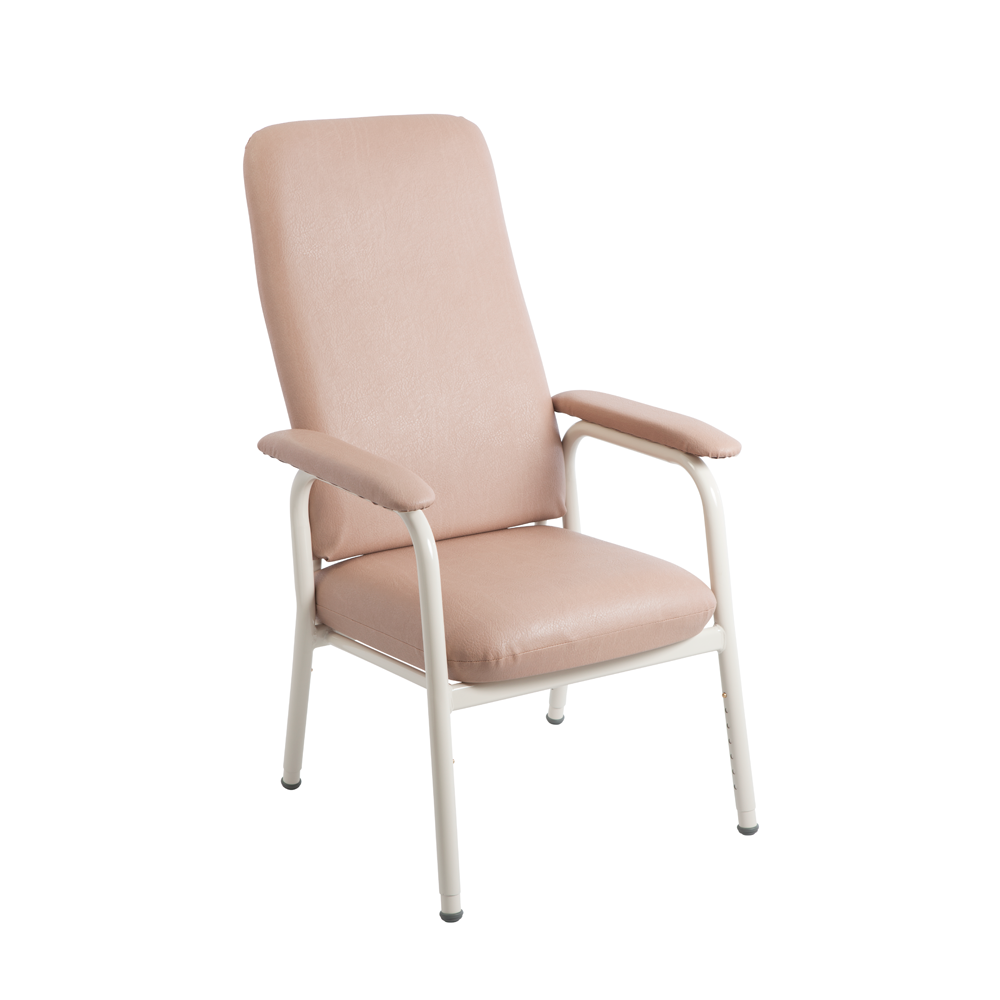
A high-back chair supports more of the trunk and may extend to the shoulders or head, depending on the model.
Benefits
- Greater trunk support
- More suitable for reduced endurance
- Supports resting
- May reduce fatigue during prolonged sitting
- Can provide clearer postural boundaries
- May suit people who lean backwards
- Often feels more secure
Limitations
- May restrict shoulder movement
- May encourage passive sitting
- Can make reaching behind difficult
- May be warmer
- May not fit under some tables
- Can interfere with carer access
- A poorly shaped high back may push the head forward
- May be harder to transport
Consider a High Back When
- The person has reduced trunk endurance
- The person needs upper-back support
- Sitting duration is prolonged
- The person tires in a low-back chair
- The person needs a more supported resting position
- The person has mild posterior or lateral instability
- Head and shoulder position remain comfortable during trial
Low-Back Day Chair
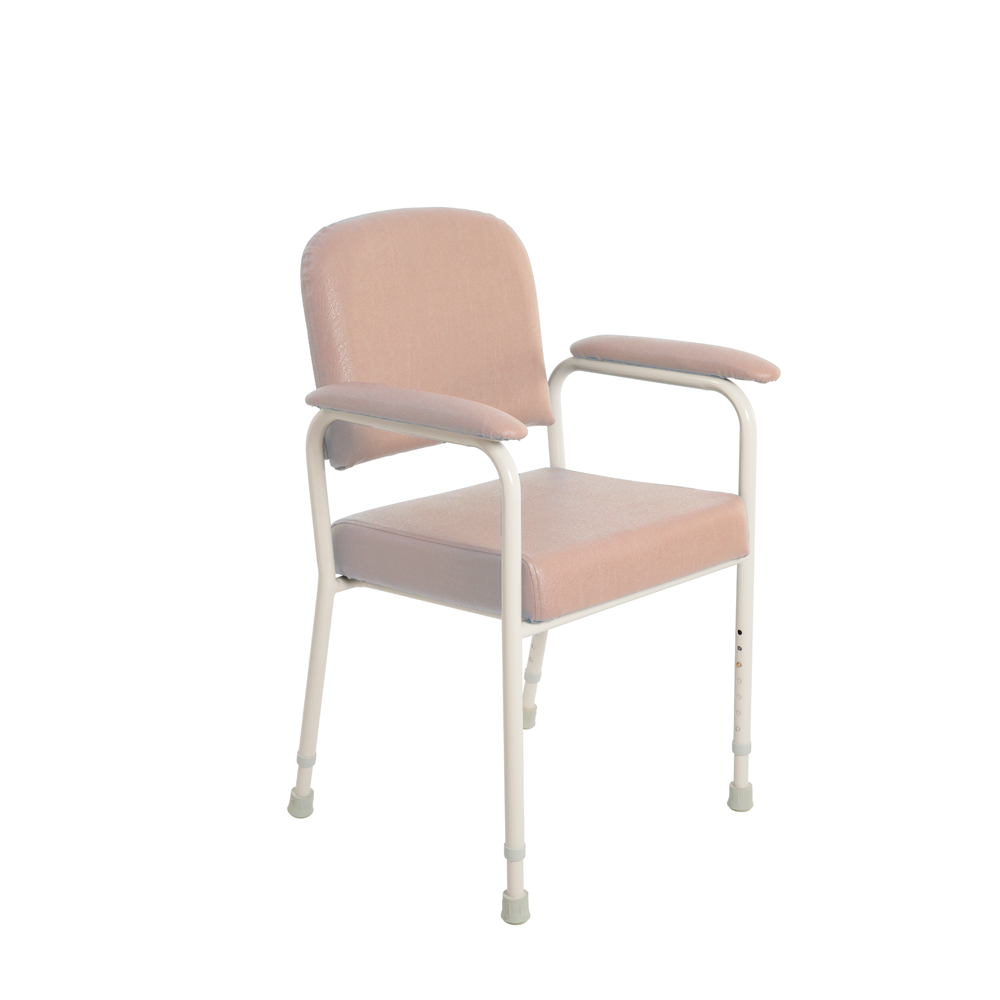
A low-back chair usually supports the pelvis and lower trunk while leaving the upper trunk and shoulders freer.
Benefits
- Allows more shoulder movement
- Supports active upright sitting
- May be easier for dining and table activities
- Often lighter
- Usually easier to move and store
- Better carer access around the upper trunk
- May suit users with good trunk control
Limitations
- Less support during fatigue
- Not suitable for poor trunk control
- May increase effort during prolonged sitting
- Limited support if the person leans backwards or sideways
- May not provide a comfortable resting position
Consider a Low Back When
- Trunk control is good
- The person mainly uses the chair for meals or activities
- Shoulder movement is important
- Sitting periods are shorter
- The person does not require upper-back support
- A high back restricts function or causes poor head posture
High Back vs Low Back Comparison
| Feature | High back | Low back |
|---|---|---|
| Trunk support | Greater | Lower |
| Resting support | Better | Limited |
| Shoulder movement | More restricted | Freer |
| Dining and table access | May be less convenient | Often better |
| Carer access | Lower | Better |
| Transport and storage | Usually larger | Usually easier |
| Best suited to | Reduced endurance or trunk support needs | Good trunk control and active sitting |
| Main risk | Passive posture or head pushed forward | Fatigue or loss of balance |
How to Choose Between High and Low Back
Choose High Back When
- The person cannot sustain upright trunk posture
- The person fatigues during sitting
- The chair is used for long periods
- A low back causes leaning or discomfort
- The person needs more rest support
Choose Low Back When
- The person has good sitting balance
- The main activity is dining or table work
- Upper-limb movement must remain free
- The person uses the chair for shorter periods
- A high back restricts shoulder or head position
Trial both when the person’s needs are unclear.
Day Chair vs Electric Lift Chair
| Feature | Day chair | Electric lift chair |
|---|---|---|
| Transfer assistance | Height, firmness and armrests | Powered lift |
| Recline | Usually fixed | Powered |
| Leg elevation | Separate stool | Built-in |
| Power required | No | Yes |
| Seat stability | Usually firm and predictable | Changes with mechanism |
| Space required | Lower | Higher |
| Cost | Lower | Higher |
| Control demand | None | Handset |
| Main use | Upright daytime sitting | Assisted transfers and adjustable rest |
Choose a Day Chair When
- Correct height and armrests allow safe standing
- Upright sitting is the main goal
- Recline is not required
- A simple stable chair meets the need
- Power and cord risks should be avoided
- Active sit-to-stand should be maintained
Choose a Lift Chair When
- A fitted day chair remains insufficient for transfers
- Powered assistance is clinically required
- Recline or leg elevation is required
- The person can use the controls safely
Day Chair vs Lounge Chair
A lounge chair may be:
- Too low
- Too soft
- Too deep
- Difficult to stand from
- Poorly supportive
- Difficult to clean
A day chair may provide:
- Firmer support
- Adjustable height
- More useful armrests
- More upright posture
- Easier transfers
- Easier cleaning
Day Chair vs Dining Chair
A day chair often provides:
- Larger armrests
- More padding
- Height adjustment
- More back support
- Greater stability
A dining chair may be more suitable when:
- Table access is the main need
- The person has good transfers
- A standard chair fits correctly
- The day chair armrests prevent close table access
Consider a specialised dining chair when close table positioning is difficult.
Revolution Chair
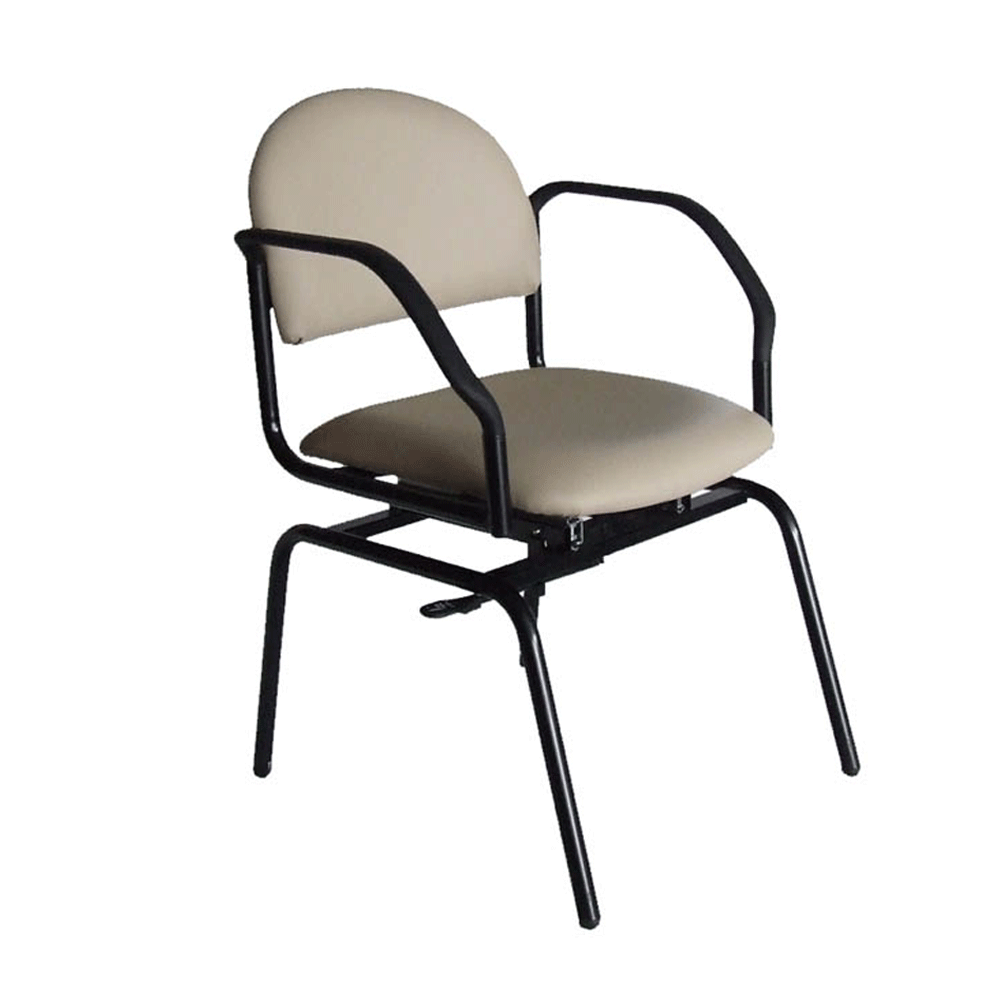
The Revolution Chair is designed to assist access to a dining table.
It uses a swivel-slide mechanism:
- The seat swivels to allow access
- The seat slides toward the table
- The chair legs remain fixed
May Suit
- Difficulty moving a chair toward a table
- Carer strain from pushing or “hipping” a chair
- A person who can safely transfer onto a rotating seat
- A person requiring closer table access
Benefits
- Reduces the need to drag the whole chair
- Chair base remains stable
- May improve dining access
- Available in height-adjustable and fixed-height versions
- Wipe-clean upholstery
Risks and Considerations
- Confirm the swivel locks or controls are understood
- Assess rotational balance
- Check transfer method
- Ensure feet and clothing are clear
- Confirm table clearance
- Check the user can move the mechanism safely
- Assess cognitive ability
- Do not assume it replaces a transfer aid
How to Choose a Day Chair
Assess the person, the activities the chair must support and the environment it will be used in.
Person
Assess:
- Height
- Weight
- Hip width
- Thigh length
- Lower-leg length
- Sitting balance
- Trunk control
- Head control
- Upper-limb function
- Grip
- Lower-limb strength
- Transfers
- Pain
- Fatigue
- Skin integrity
- Pressure risk
- Cognition
- Vision
- Continence
- Ability to reposition
Activity
Assess:
- Meals
- Reading
- Television
- Social activities
- Resting
- Personal care
- Duration of sitting
- Frequency of transfers
- Need for a table
- Need for a footstool
- Carer assistance
Environment
Assess:
- Available space
- Floor surface
- Table height
- Chair position
- Walking-aid placement
- Carer access
- Doorways
- Heating and direct sunlight
- Trip hazards
- Cleaning requirements
- Transport and storage
Fitting the Chair
Check each measurement with the person seated in their usual clothing and footwear.
Seat Width
Measure the widest part of the hips or thighs.
The seat should:
- Allow comfortable clearance
- Avoid compression
- Allow access to armrests
- Support the pelvis centrally
- Fit any prescribed cushion
Too Narrow
- Pressure at hips or thighs
- Difficult transfers
- Skin risk
- Restricted clothing
- Armrests may press into the body
Too Wide
- Reduced side support
- Leaning
- Difficulty reaching armrests
- Poor transfer mechanics
- Cushion movement
Redgum’s Katie Plus high-back model is an example with a 530 mm width between armrests. Wider does not automatically mean suitable.
Seat Depth
Measure from the back of the pelvis to the back of the knee.
Allow clearance behind the knees.
Too Deep
- Person sits forward
- Reduced back support
- Pressure behind the knees
- Sliding
- Posterior pelvic tilt
Too Shallow
- Reduced thigh support
- Increased pelvic pressure
- Reduced stability
Aidacare notes that some day chairs allow seat-depth adjustment. The Redgum Katie chairs also offer adjustable seat depth.
Seat Height
The height should allow:
- Feet to rest flat
- Hips and knees to be positioned appropriately
- Safe sit-to-stand
- The person to reach the armrests
- The chair to fit the table when required
Too Low
- Increased effort to stand
- Deep hip and knee flexion
- Posterior pelvic tilt
- Carer lifting
Too High
- Feet unsupported
- Pressure behind thighs
- Sliding
- Unsafe standing
Do not use a general height range without checking the person. Fit should be based on lower-leg length, footwear, cushion height and transfer ability.
Backrest
Check:
- Height
- Shape
- Lumbar support
- Thoracic support
- Shoulder clearance
- Head position
- Backrest angle
- Comfort during activity
Redgum’s Katie high-back chair includes a contoured padded backrest and adjustable seat depth and height. The low-back version provides lower back support with freer upper-body movement.
Armrests
Armrests should:
- Be reachable
- Support the forearms
- Assist transfers
- Allow relaxed shoulders
- Avoid pressure on the arms
- Fit under or beside the table where required
Too High
- Shoulder elevation
- Neck discomfort
- Poor posture
Too Low
- Leaning
- Reduced transfer assistance
- Poor upper-limb support
Seat Angle
Some chairs allow seat-angle adjustment.
A slight anterior angle may assist standing for some people.
Risks include:
- Sliding
- Reduced pelvic stability
- Increased pressure
- Feeling pushed forward
A posterior angle may improve stability but can make standing harder.
Foot Support
Feet should be supported by:
- The floor
- A prescribed footstool
- Another stable support
A footstool should:
- Be height appropriate
- Have a stable base
- Avoid creating a trip hazard
- Support both legs
- Be positioned before use
The Redgum Katie range has an adjustable padded footstool with height and angle adjustment.
Upholstery
Vinyl
Benefits:
- Easy to clean
- Suitable for continence management
- Durable
- Common in clinical settings
Limitations:
- Can feel hot
- May become slippery
- Damage can expose foam
- Reduced breathability
Fabric
Benefits:
- More breathable
- Domestic appearance
- May reduce sliding
Limitations:
- Harder to clean
- Absorbs moisture
- Staining
- Infection-control concerns
Safe Working Load
Confirm:
- User weight is below the safe working load
- Seat width remains suitable
- Chair is stable
- Accessories do not affect safety
Safe working load does not determine body fit.
Product Examples
The following are examples only. Specifications change, so confirm the current model and variant before prescribing.
Redgum Katie High-Back Day Chair
Features include:
- Adjustable seat height
- Adjustable seat depth
- Contoured high backrest
- Padded seat
- Large padded armrests
- Rear transport wheels
- Folding backrest for storage
- Vinyl upholstery
May Suit
- Reduced trunk endurance
- Need for a high supportive back
- Adjustable transfer height
- Prolonged upright sitting
Redgum Katie Low-Back Day Chair
Features include:
- Adjustable seat height
- Adjustable seat depth
- Low padded backrest
- Large padded armrests
- Rear transport wheels
- Vinyl upholstery
May Suit
- Good trunk control
- Dining and table tasks
- Need for freer shoulder movement
- Shorter sitting periods
Aidacare Day Chairs
Aidacare’s day-chair range includes models with:
- High or low contoured backrests
- Padded arms
- Height-adjustable seats
- Adjustable seat depth on selected chairs
- Adjustable seat or backrest angle on selected chairs
- Vinyl and selected fabric finishes
Confirm the exact model specifications before prescription.
Trial
The trial should include:
- Sitting down
- Standing up
- Remaining seated during the intended activity
- Reaching the armrests
- Foot support
- Back support
- Table access
- Use of a footstool
- Repositioning
- Carer assistance
- Walking-aid access
- Skin and comfort check after sitting
Trial Checklist
- [ ] Seat width is suitable
- [ ] Seat depth is suitable
- [ ] Seat height supports transfers
- [ ] Feet are supported
- [ ] Armrests are reachable
- [ ] Backrest supports posture
- [ ] Head position is neutral
- [ ] Person can sit back in the chair
- [ ] Person can stand safely
- [ ] Cushion fits if used
- [ ] Table access is adequate
- [ ] Walking aid is accessible
- [ ] Carer has enough space
- [ ] Chair is stable
- [ ] Safe working load is suitable
- [ ] Upholstery meets cleaning needs
- [ ] Sitting tolerance is acceptable
Risks and Considerations
The main risks to discuss with the person and their carers are outlined below.
Falls During Transfers
Risk increases with:
- Incorrect seat height
- Chair movement
- Poor foot placement
- Armrests too low or unstable
- Loose rugs
- Walking aid out of reach
- Person pushing through an unstable footstool
Sliding
Risk increases with:
- Excessive seat depth
- Sloping seat
- Slippery vinyl
- Poor pelvic support
- Feet unsupported
- Low backrest
- Fatigue
Pressure Injury
A day chair is not automatically pressure redistributing.
Risk increases with:
- Prolonged sitting
- Reduced sensation
- Incontinence
- Poor posture
- Inability to reposition
- Worn foam
- Incorrect cushion
See:
- Cushions
- Pressure Injury Prevention and Management
Postural Risk
Poor fit may cause:
- Posterior pelvic tilt
- Leaning
- Head forward
- Shoulder elevation
- Leg asymmetry
- Foot instability
Footstool Risk
A footstool can:
- Create a trip hazard
- Move during use
- Obstruct transfers
- Increase falls risk if used to push up
- Reduce circulation if too high
Transport Wheels
Rear wheels assist carers to move an unoccupied chair.
Do not:
- Move the chair while occupied unless the manufacturer specifically permits it
- Tilt the chair without training
- Assume rear wheels function like wheelchair wheels
Carer Manual Handling
Assess:
- Chair position
- Space
- Transfer method
- Ability to adjust legs
- Ability to move the unoccupied chair
- Cleaning
- Footstool handling
Do Not
- Use a damaged chair
- Exceed the safe working load
- Stand on the chair
- Push up from a footstool
- Add loose cushions without reassessment
- Place the chair on an unstable surface
- Block the walking-aid path
- Move an occupied chair unless approved
- Use the chair as a restraint
Cleaning and Maintenance
Check:
- Upholstery
- Foam
- Frame
- Armrests
- Adjustment pins
- Leg height
- Rear wheels
- Fasteners
- Rubber feet
- Backrest
- Welds
- Footstool
Review Triggers
- Falls or near misses
- New difficulty standing
- New pain
- Sliding
- Leaning
- New pressure area
- Weight change
- Cognitive change
- Increased sitting duration
- Increased carer assistance
- Chair damage
- Adjustment mechanism failure
- Change in table or room layout
- New cushion
- Functional decline
Client and Carer Instructions
Before Sitting
- Check the chair is stable.
- Keep the floor clear.
- Place the walking aid within reach.
- Move the footstool away during transfers.
- Check the cushion and upholstery.
Sitting Down
- Back up until the legs touch the seat.
- Reach for both armrests.
- Lower slowly.
- Move the pelvis back.
- Place both feet on the floor or foot support.
Standing Up
- Move the footstool away.
- Move forward on the seat.
- Place both feet securely.
- Push through the armrests.
- Stand and stabilise.
- Take hold of the walking aid.
Stop Using and Seek Review When
- The chair moves
- An adjustment pin is loose
- The upholstery or frame is damaged
- The person slides
- Standing becomes unsafe
- New pain or skin redness develops
Funding and Access in Australia
Equipment may be funded or loaned through several pathways, depending on the person's circumstances:
- NDIS — for NDIS participants, assistive technology can be funded in the plan when it is reasonable and necessary. Higher-cost or complex items usually need an assessment and quote from an allied health professional such as an OT.
- Support at Home and My Aged Care — older Australians can be assessed through My Aged Care. Support at Home includes an Assistive Technology and Home Modifications (AT-HM) scheme for approved equipment.
- State and territory equipment schemes — each state runs its own equipment programs with their own eligibility rules (for example, the DHS Equipment Program in South Australia, managed by the Domiciliary Equipment Service).
- DVA — eligible veterans may access equipment through the Rehabilitation Appliances Program (RAP).
- Hospital and community loans — short-term loan equipment is often available after a hospital stay or for palliative care.
- Private purchase or hire — trial before buying where possible.
An occupational therapist can help confirm the right equipment and which funding pathway applies.
Related Notes
- Electric Recline Lift Chair
- Cushions
- Pressure Injury Prevention and Management
- Walkers
- Walking Frames
- Home Safety Assessment
References
- Aidacare. Day Chairs: https://www.aidacare.com.au/products/hospital-equipment/patient-chairs/day
- Aidacare. Height Adjustable Chairs: https://shop.aidacare.com.au/collections/adjustable-height-chairs
- Aidacare. Revolution Chair: https://www.aidacare.com.au/products/medical-therapeutic-chairs/assistive-chairs/revolution-chair/
- Redgum Brand. Day Chairs: https://www.redgumbrand.com.au/product-category/furniture/day-chairs/
- Redgum Brand. Katie High-Back Day Chair: https://www.redgumbrand.com.au/product/katie-high-back-chair/
- Redgum Brand. Katie Low-Back Day Chair: https://www.redgumbrand.com.au/product/katie-low-back-day-chair-multi-adjustable/
- Blackler A et al. Seating in aged care: physical fit, independence and comfort: https://pmc.ncbi.nlm.nih.gov/articles/PMC5758957/
- Relevant manufacturer instructions and organisational procedures
- NDIS. Assistive technology explained: https://www.ndis.gov.au/participants/assistive-technology-explained
- Australian Government Department of Health, Disability and Ageing. Assistive Technology and Home Modifications (AT-HM) scheme: https://www.health.gov.au/our-work/support-at-home/delivering-services-for-support-at-home/assistive-technology-and-home-modifications-at-hm-scheme
- Government of South Australia. DHS Equipment Program (Domiciliary Equipment Service): https://des.sa.gov.au/
- Department of Veterans' Affairs. Aids, equipment and modifications through the Rehabilitation Appliances Program (RAP): https://www.dva.gov.au/what-we-help-with/care-at-home-and-aged-care-services/living-independently/dva-in-home-programs/aids-equipment-and-modifications-through-the-rehabilitation-appliances-program-rap
- Aidacare. Aspire High Back Classic Day Chair: https://shop.aidacare.com.au/products/aspire-high-back-classic-day-chair
- Aidacare. Aspire Low Back Classic Day Chair: https://shop.aidacare.com.au/products/aspire-low-back-classic-day-chair
- Aidacare. Revolution Chair: https://shop.aidacare.com.au/products/revolution-chair
Image Credits
- Image: Aspire High Back Classic Day Chair (featured image), courtesy of Aidacare, https://shop.aidacare.com.au/products/aspire-high-back-classic-day-chair
- Image: Aspire High Back Classic Day Chair, courtesy of Aidacare, https://shop.aidacare.com.au/products/aspire-high-back-classic-day-chair
- Image: Aspire Low Back Classic Day Chair, courtesy of Aidacare, https://shop.aidacare.com.au/products/aspire-low-back-classic-day-chair
- Image: Revolution Chair, courtesy of Aidacare, https://shop.aidacare.com.au/products/revolution-chair