Wheelchairs
Manual wheelchairs should be selected following assessment of mobility goals, propulsion ability, posture, skin risk, transfers, cognition, endurance, body measurements, environment, car transport and carer manual-handling capacity. A basic folding wheelchair may not be suitable for full-day use or complex seating needs.
Overview
This note covers:
- Self-propelled manual wheelchairs
- Attendant-propelled manual wheelchairs
- Transit wheelchairs
- Folding transport wheelchairs
- Manual wheelchair power-assist add-ons
Powered wheelchairs and powered mobility scooters are covered separately in:
Purpose
A manual wheelchair may:
- Support mobility when walking is unsafe or limited
- Increase access to appointments and community activities
- Reduce fatigue and falls risk over longer distances
- Support mobility during recovery or functional decline
- Allow independent mobility through self-propulsion
- Allow a carer or attendant to assist with mobility
- Provide a seated mobility option that can be folded for vehicle transport
Main Types
The main device types are outlined below.
Self-Propelled Wheelchair
A self-propelled wheelchair has large rear wheels with handrims that the user can push.
It may also have push handles and attendant brakes.
Choose When
- The user wants to propel independently
- Upper-limb strength and endurance are adequate
- Hand function and coordination are adequate
- The user can brake, turn and control speed
- The environment provides sufficient space
- Rear-wheel access is not blocked by posture or armrests
- The user can complete pressure relief or has an appropriate plan
- The chair will be used for more than brief attendant-assisted outings
Benefits
- Supports independent mobility
- Allows the user to control speed and direction
- Large rear wheels usually manage small surface changes better than transit wheels
- Rear wheels may be quick-release for car transport
- Can be pushed by an attendant when required
Limitations
- Wider and usually heavier than a transit chair
- Requires upper-limb effort
- Repetitive propulsion may contribute to shoulder or wrist strain
- Requires adequate cognition and visual-perceptual ability
- Large rear wheels take more car-boot space
- Poor fit reduces propulsion efficiency
- A lightweight transport-style chair may not suit full-time independent propulsion
Attendant-Propelled Wheelchair
An attendant-propelled wheelchair is primarily pushed by another person.
It usually has smaller rear wheels and push handles.
Choose When
- The user cannot propel safely or effectively
- Community outings are carer-assisted
- Compact folding and lower lifting weight are priorities
- Use is intermittent or for shorter trips
- An attendant can safely push, brake and manage slopes
- The user can sit safely in the available seating system
Benefits
- Often lighter and narrower than a self-propelled chair
- Smaller rear wheels may reduce folded size
- Easier to load into some vehicles
- Attendant brakes may assist on slopes
- Suitable for appointments and short outings
Limitations
- User has limited independent mobility
- Attendant is required
- Small rear wheels may perform poorly on uneven surfaces
- The attendant must manage ramps, slopes and kerbs
- May not provide adequate postural or pressure support
- Compact transport chairs can become uncomfortable during prolonged sitting
Transit Wheelchair
“Transit wheelchair” is commonly used for a compact attendant-propelled wheelchair with small rear wheels.
A transit chair is intended mainly for transporting a seated person with an attendant. It is not the same as a wheelchair approved as a vehicle seat for occupied transport.
Choose When
- Use is occasional
- Trips are short
- The chair must fit into a car boot
- An attendant is always available
- The environment is mainly indoors or on smooth outdoor surfaces
- Low chair weight is a major priority
Benefits
- Compact
- Often lightweight
- Narrower overall width
- Easy to store
- Easier to lift than many self-propelled chairs
Limitations
- Cannot usually be independently propelled
- Small wheels are less suitable for rough surfaces
- Ride may be less comfortable
- Limited adjustability
- Not usually appropriate for prolonged daily use
- The term “transit” does not automatically mean crash-tested for occupied vehicle transport
Self-Propelled vs Attendant-Propelled vs Transit
| Feature | Self-propelled | Attendant-propelled | Transit |
|---|---|---|---|
| Main propeller | User or attendant | Attendant | Attendant |
| Rear wheels | Large | Small or medium | Small |
| Independent mobility | Yes, when able | Usually no | No |
| Chair width | Usually wider | Usually narrower | Often narrowest |
| Chair weight | Often heavier | Often lighter | Often light |
| Outdoor performance | Usually better | Moderate | Best on smooth surfaces |
| Car-boot loading | Larger wheels may need removal | Often easier | Often easiest |
| Typical use | Independent or mixed mobility | Assisted outings | Short assisted trips |
| Seating adjustability | Varies | Often limited | Usually limited |
| Main risk | Overuse, poor propulsion fit | Attendant control and manual handling | Overuse beyond intended duration |
How to Choose the Wheelchair Type
Choose Self-Propelled When
- Independent mobility is a goal
- The user can reach and push both handrims
- Upper-limb strength and endurance are sufficient
- The user can brake and turn safely
- The wheelchair will be used regularly
- The user can learn efficient propulsion
- Larger rear wheels will fit the home and vehicle
Choose Attendant-Propelled When
- The user cannot self-propel
- An attendant is consistently available
- The chair is mainly used for appointments or outings
- A lighter and narrower chair is needed
- Car transport is frequent
- The attendant can manage the chair safely
Choose a Transit Chair When
- Use is brief and occasional
- Compact transport is the main priority
- The user will always be pushed
- Surfaces are smooth
- The person does not require complex posture or pressure management
- The chair fits the person and vehicle
Consider a More Configurable Manual Wheelchair When
- The person uses the wheelchair for much of the day
- Postural support is required
- Pressure injury risk is moderate or high
- Seat dimensions need customisation
- The person foot-propels
- Wheel position must be adjusted for efficient propulsion
- The person has asymmetry, contracture or changing tone
- A power-assist system is planned
- The basic folding chair does not support function or comfort
Consider Powered Mobility Instead When
- Manual propulsion is not sustainable
- Shoulder or hand pain limits propulsion
- Community distances exceed the person’s endurance
- The attendant cannot safely push
- Independent mobility is required but manual propulsion is not possible
- Power-assist does not meet the person’s needs
Occupational Therapy Assessment
Assess the person, the activities the wheelchair must support and the environments it will be used in.
Person
Assess:
- Mobility goals
- Walking ability
- Falls history
- Sitting tolerance
- Posture and pelvic position
- Trunk control
- Upper-limb strength
- Shoulder and hand pain
- Grip and coordination
- Lower-limb position
- Foot propulsion
- Sensation
- Skin integrity
- Pressure injury history
- Continence
- Cognition
- Vision and perception
- Fatigue
- Body weight
- Height
- Relevant body dimensions
- Ability to complete pressure relief
- Ability to operate brakes
- Ability to fold or dismantle the chair
Activity
Assess:
- Frequency of use
- Duration of sitting
- Indoor or outdoor use
- Independent or attendant propulsion
- Transfers
- Toileting
- Eating at tables
- Community access
- Shopping
- Appointments
- Vehicle transport
- Storage
- Carrying personal items
- Slopes, ramps and kerbs
Environment
Measure and assess:
- Doorways
- Hallways
- Bathroom access
- Turning spaces
- Lift dimensions
- Ramps
- Thresholds
- Floor surfaces
- Path surfaces
- Gradient and cross-fall
- Vehicle boot opening
- Boot width, depth and height
- Lifting height into the vehicle
- Storage space
- Charging location if power-assist is used
Wheelchair Measurements
Measure the person in a stable, supported sitting position. Use the cushion intended for the wheelchair when checking final fit.
Seat Width
Measure across the widest part of the hips or thighs.
Allow enough clearance for:
- Clothing
- Hand access
- Transfers
- Cushion fit
- Hip movement
Avoid excessive width.
A seat that is too wide may:
- Reduce pelvic support
- Increase leaning
- Make self-propulsion less efficient
- Increase overall chair width
- Make doorway access harder
- Allow the cushion to move
A seat that is too narrow may:
- Cause pressure at the hips or thighs
- Restrict clothing
- Increase skin risk
- Make transfers difficult
- Prevent correct cushion fit
Seat Depth
Measure from the back of the pelvis to the back of the knee.
Allow clearance behind the knees.
A seat that is too deep may:
- Press behind the knees
- Encourage sliding
- Prevent contact with the backrest
- Affect circulation
- Make transfers harder
A seat that is too shallow may:
- Reduce thigh support
- Increase pressure under the pelvis
- Reduce stability
Seat-to-Floor Height
Consider:
- Foot contact
- Footplate clearance
- Foot propulsion
- Transfers
- Table access
- Cushion height
- Overall wheelchair height
- Car transfer method
A seat that is too high may:
- Prevent foot contact
- Reduce transfer safety
- Make foot propulsion impossible
A seat that is too low may:
- Increase hip and knee flexion
- Make standing transfers difficult
- Reduce caster clearance
- Increase pressure through the feet or thighs
Backrest Height
Consider:
- Trunk control
- Shoulder movement
- Self-propulsion
- Postural support
- Comfort
- Head support needs
A high backrest can improve support but may restrict shoulder movement during propulsion.
Armrest Height
Armrests should support the forearms without elevating the shoulders.
Incorrect height may contribute to:
- Shoulder elevation
- Trunk leaning
- Reduced pressure distribution
- Difficulty at tables
- Transfer obstruction
Footrest Length
Adjust so that:
- Feet are supported
- Thighs remain supported
- Footplates clear the ground
- Knees and hips are positioned appropriately
- Footplates do not interfere with transfers
Footrests that are too low may reduce ground clearance.
Footrests that are too high may increase thigh pressure.
Safe Working Load
Confirm:
- User weight is below the manufacturer’s safe working load
- Cushion and accessories are compatible
- Weight distribution is appropriate
- The chair remains stable
- The safe working load is not treated as the recommended user size
A person may be below the safe working load but still be too wide, tall or poorly supported by the chair.
Chair Weight and Transport Weight
Check all relevant weights:
- Total chair weight
- Frame weight
- Heaviest component
- Weight after removing leg rests
- Weight after removing quick-release rear wheels
- Power-assist unit weight
- Battery weight
- Combined lift required
The lightest advertised weight may refer to the frame without removable components.
Folding and Dismantling
Check:
- Cross-folding mechanism
- Folding backrest
- Removable leg rests
- Swing-away leg rests
- Quick-release rear wheels
- Removable cushion
- Anti-tippers
- Folding footplates
- Power-assist removal
- Whether parts can be safely reattached
Product Examples
Product specifications can change. Confirm the exact model and variant before prescription.
Aspire Socialite Attendant-Propelled
Example specifications:
- Seat width: 450 mm
- Seat depth: 430 mm
- Total width: 595 mm
- Unit weight: 8.9 kg
- Frame weight: 8.1 kg
- Safe working load: 115 kg
- Backrest height: 410 mm
- Attendant brakes with parking lock
- Removable leg rests
- Folding backrest
May Suit
- Short trips
- Appointments
- Carer-assisted outings
- Users needing a light folding chair
- Vehicles with limited lifting capacity
Main Considerations
- Fixed seat size
- Limited adjustability
- User cannot independently self-propel
- Confirm comfort and posture for intended sitting duration
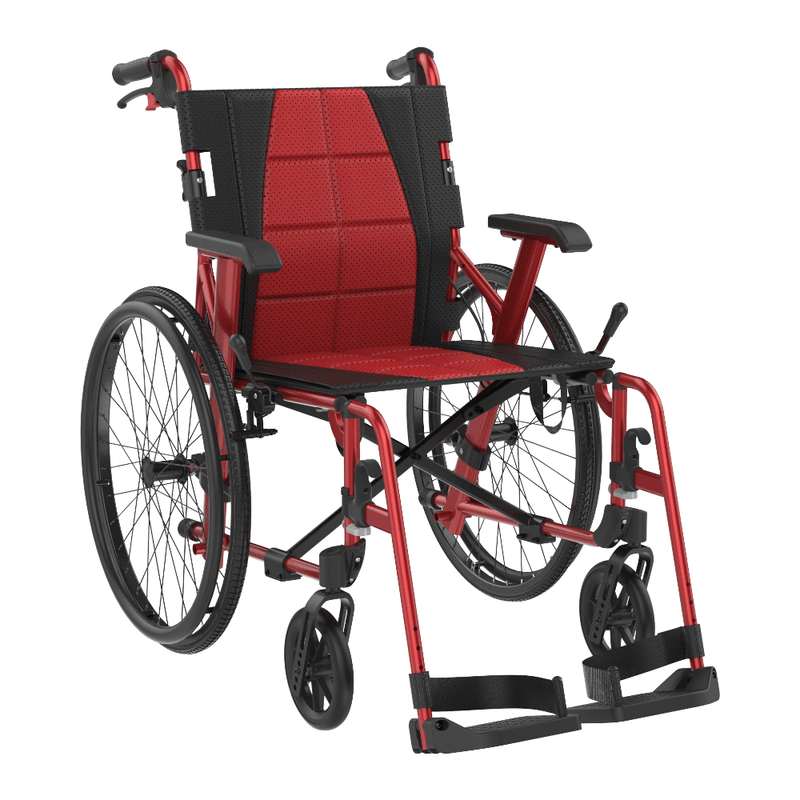
Aspire Socialite Self-Propelled
Example specifications:
- Seat width: 450 mm
- Seat depth: 430 mm
- Total width: 675 mm
- Total length: 1030 mm
- Unit weight: 13 kg
- Safe working load: 115 kg
- Backrest height: 410 mm
- Large rear wheels
- Folding frame and backrest
- Removable leg rests
May Suit
- A user who can independently propel
- Mixed user and attendant propulsion
- Short outings and appointments
- A person needing a lightweight folding self-propelled chair
Main Considerations
- Wider and heavier than the attendant version
- Fixed 450 mm seat width
- Confirm rear-wheel access
- Confirm shoulder endurance
- Large wheels affect boot space
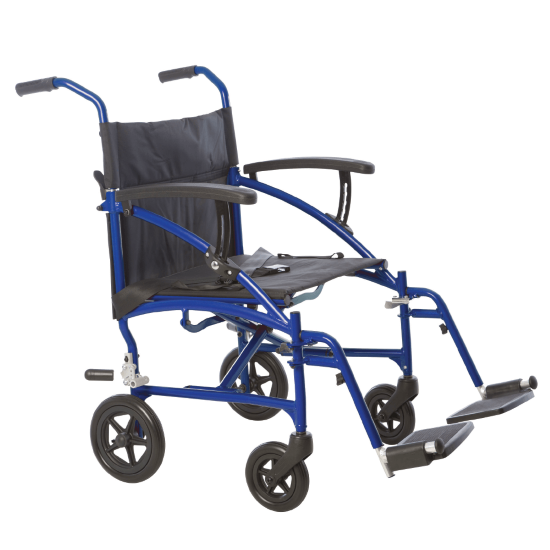
Aspire Lite Wheelchair
The Aspire Lite is a lightweight folding manual wheelchair available in different propulsion configurations and sizes, depending on the current range.
May Suit
- Intermittent use
- Community outings
- Users or carers prioritising portability
- Situations requiring a basic folding chair
Check the Exact Variant
- Self-propelled or attendant-propelled
- Seat width
- Safe working load
- Total weight
- Frame weight
- Rear-wheel release
- Folded dimensions
- Leg-rest removal
- Brake type
Do not rely on the product family name alone because specifications may differ between variants.
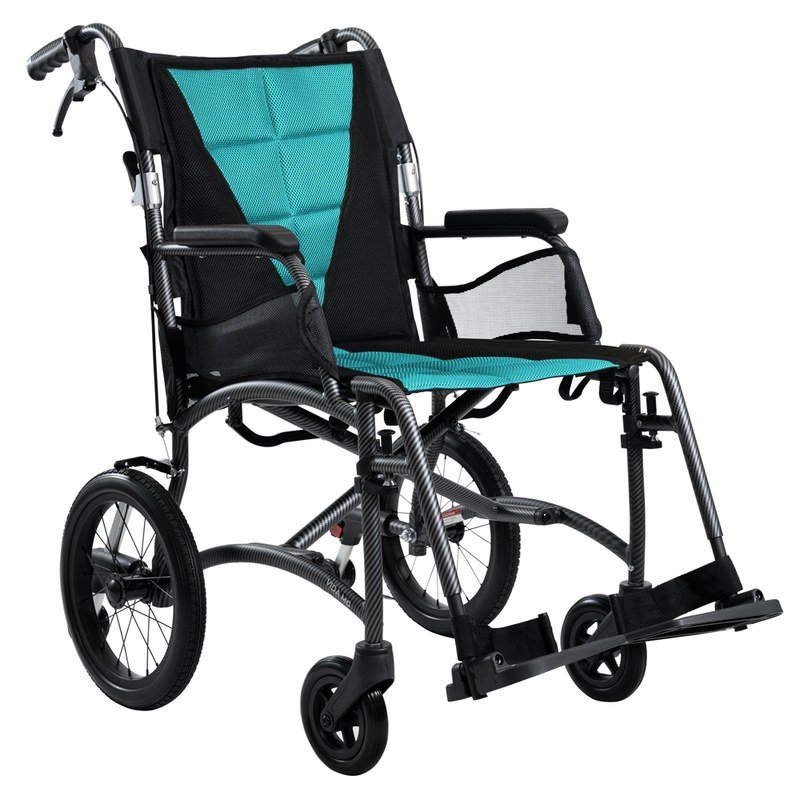
Aspire VIDA MG
The VIDA MG uses a magnesium frame and is available in attendant- and self-propelled variants with 400 mm and 450 mm seat widths.
Example specifications:
| Variant | Seat width | Total width | Unit weight | Safe working load |
|---|---|---|---|---|
| Attendant, 400 mm | 400 mm | 600 mm | 9.7 kg | 113 kg |
| Self-propelled, 400 mm | 400 mm | 610 mm | 11.8 kg | 113 kg |
| Attendant, 450 mm | 450 mm | 650 mm | 9.9 kg | 113 kg |
| Self-propelled, 450 mm | 450 mm | 690 mm | 12.0 kg | 113 kg |
Features include:
- Folding frame
- Hinged backrest
- Detachable leg rests
- Attendant brakes
- Anti-tippers
- Quick-release wheels
May Suit
- Frequent vehicle transport
- Users requiring a lighter frame
- Choice between 400 mm and 450 mm seat widths
- Attendant or independent propulsion
Main Considerations
- Confirm total weight and minimum transport weight
- Confirm the 113 kg safe working load
- Magnesium construction does not remove the need for safe lifting technique
- Self-propelled variants remain wider and heavier
Redgum Opal 18-inch Transit Wheelchair
Example specifications:
- Seat width: 460 mm
- Seat depth: 400 mm
- Seat height: 500 mm
- Overall width: 550 mm
- Folded width: 250 mm
- Product weight: 9.4 kg
- Maximum user weight: 136 kg
- 300 mm rear wheels
- 200 mm front wheels
- Attendant brakes
- Detachable swing-away leg rests
May Suit
- Short attendant-assisted outings
- Narrow doorways
- Smooth indoor and outdoor surfaces
- Car-boot transport
- Users fitting a 460 mm seat
Main Considerations
- No independent propulsion
- Small rear wheels
- Fixed seat dimensions
- Confirm 500 mm seat height supports transfers
- Assess comfort for intended sitting duration
Product Comparison
| Product | Propulsion | Seat width | Chair weight | Safe working load | Main transport feature |
|---|---|---|---|---|---|
| Aspire Socialite AP | Attendant | 450 mm | 8.9 kg | 115 kg | Folding back and removable leg rests |
| Aspire Socialite SP | Self or attendant | 450 mm | 13 kg | 115 kg | Folding frame, removable leg rests |
| Aspire VIDA MG AP | Attendant | 400 or 450 mm | 9.7–9.9 kg | 113 kg | Folding back, quick-release features |
| Aspire VIDA MG SP | Self or attendant | 400 or 450 mm | 11.8–12.0 kg | 113 kg | Quick-release rear wheels |
| Redgum Opal Transit | Attendant | 460 mm | 9.4 kg | 136 kg | Folded width 250 mm |
The lightest chair is not automatically the most suitable. Seat fit, stability, posture, transfers and surface performance remain central.
Power-Assist Add-Ons
Power assist adds motorised assistance to a compatible manual wheelchair.
It does not automatically convert every manual wheelchair into a safe powered mobility device.
Main Types
Rear Push-Assist Unit
A powered wheel attaches behind or under the wheelchair and assists forward movement.
Examples include SmartDrive-style systems.
May suit:
- Independent manual wheelchair users
- Reduced propulsion endurance
- Shoulder pain or overuse risk
- Longer community distances
- Slopes and carpet
Consider:
- Wheelchair compatibility
- User control method
- Stopping and braking
- Attachment clearance
- Unit and battery weight
- Removal for transport
- Training
- Indoor manoeuvrability
Power-Assist Wheels
Powered wheels replace the standard rear wheels and amplify the user’s push.
Examples include Alber e-motion-style systems.
May suit:
- Users who can push but need reduced effort
- Users who want to retain pushrim control
- Bilateral propulsion
- Slopes and longer distances
Consider:
- Each wheel’s weight
- Lifting into the vehicle
- Wheel removal
- Charging
- Handrim control
- Chair width
- Cost
- Compatibility
Attendant Power Assist
A powered unit assists the attendant to push the wheelchair.
May suit:
- Heavy users
- Slopes
- Carer fatigue
- Reduced attendant strength
- Longer assisted distances
Consider:
- Attendant control and braking
- Safe use on slopes
- Attachment to the wheelchair
- Battery and unit weight
- Storage
- Car boot loading
- Whether the base wheelchair remains suitable
Front Attachment or Handcycle-Style Add-On
A powered front attachment connects to the wheelchair and lifts or unloads the front castors.
May suit:
- Independent community mobility
- Longer distances
- Selected outdoor surfaces
Consider:
- Turning radius
- Braking
- road and path use
- transfer into the device
- attachment method
- transport
- total length
- local regulations
- training
Benefits of Power Assist
- Reduced propulsion effort
- Increased distance
- Reduced attendant effort
- Improved access on slopes
- Potential reduction in repetitive upper-limb loading
- Retention of a manual wheelchair base
- Easier transport than some powered wheelchairs
Limitations of Power Assist
- Added weight
- Battery charging
- Device compatibility
- Increased maintenance
- More complex control
- Potential for unintended movement
- Greater stopping distance
- Reduced portability
- Lithium-battery transport requirements
- Cost
- Need for training and review
Power-Assist Assessment
Assess:
- Manual wheelchair suitability
- Frame compatibility
- User or attendant control
- Cognition
- Vision and perception
- Reaction time
- Braking
- slopes
- kerbs
- indoor use
- outdoor use
- transfer method
- battery management
- charging
- vehicle transport
- ability to lift components
- backup mobility plan
Loading a Wheelchair Into a Car Boot
Assess the vehicle, chair and person completing the lift. A folding chair can still be unsafe to lift if it is heavy, awkward, held away from the body or lifted over a high boot lip.
Before Selecting the Wheelchair
Measure:
- Boot opening width
- Boot opening height
- Boot floor depth
- Boot lip height
- Load height from the ground
- Space around wheel arches
- Available space after groceries or mobility aids
- Rear-seat folding options
Check:
- Folded wheelchair dimensions
- Chair weight
- Frame weight
- Heaviest removable component
- Whether leg rests must be removed
- Whether rear wheels must be removed
- Whether the chair can stand upright
- Whether the boot floor is level
- Whether a loading aid is required
Before Lifting
- Park on a level surface.
- Apply the vehicle parking brake.
- Clear the boot.
- Apply the wheelchair brakes where appropriate.
- Remove the cushion.
- Remove leg rests.
- Remove quick-release rear wheels when required.
- Fold the backrest.
- Fold the frame.
- Secure loose parts.
Lifting Principles
- Move close to the wheelchair
- Use a stable stance
- Hold secure frame points
- Keep the load close to the body
- Avoid twisting
- Turn with the feet
- Avoid lifting by removable armrests or footrests
- Use two people when required
- Use a ramp, hoist or boot-loading device when manual lifting is unsafe
Sliding or Tilting Into the Boot
Some chairs may be loaded by:
- Tilting the chair onto the boot edge
- Sliding it on a protective mat
- Loading the frame first
- Loading wheels and leg rests separately
Only use a method that has been assessed as safe for the chair, vehicle and person.
Unloading
- Prevent the chair from unfolding unexpectedly
- Keep fingers clear of folding joints
- Lower rather than drop the chair
- Reattach wheels and leg rests correctly
- Confirm quick-release axles are locked
- Open the frame fully
- Check brakes before use
Manual-Handling Risks
- Back strain
- Shoulder strain
- Finger entrapment
- Dropping the chair
- Damage to vehicle or wheelchair
- Uncontrolled unfolding
- Lifting heavy powered wheels
- Handling lithium batteries
- Repeated lifting over a high boot lip
Alternatives When Boot Loading Is Unsafe
- Lighter wheelchair
- Attendant-propelled version
- Quick-release wheels
- Smaller transit chair
- Vehicle boot hoist
- Wheelchair loading ramp
- Sliding board or loading tray
- Different vehicle
- Wheelchair-accessible transport
- Powered mobility device designed for vehicle loading
- Two-person handling plan
Transfers
Assess:
- Standing transfer
- Pivot transfer
- Slide-board transfer
- Hoist transfer
- Armrest removal
- Leg-rest removal
- Footplate movement
- Brake access
- Seat height
- Cushion stability
- Carer space
How to Use
Use the following steps as a starting point, adapted to the person's prescribed technique.
Before Use
- Check tyres and castors
- Check brakes
- Check leg rests
- Check quick-release wheels
- Check folding locks
- Check cushion position
- Check anti-tippers
- Remove loose objects
- Confirm the user is positioned safely
Self-Propulsion
- Sit with the pelvis supported
- Place hands on the handrims
- Use smooth, controlled pushes
- Avoid trapping fingers between handrim and wheel
- Slow before turns and slopes
- Use gloves when clinically appropriate
- Avoid excessive speed
- Follow training for ramps and kerbs
Attendant Propulsion
- Use both push handles
- Keep the wheelchair close
- Slow before turns
- Use attendant brakes appropriately
- Approach thresholds straight
- Avoid sudden tipping
- Use kerb-climbing features only as trained
- Do not descend steep slopes without assessment
Applying Brakes
- Stop the wheelchair
- Apply both brakes
- Confirm the chair is stable
- Use parking brakes for transfers
- Do not use parking brakes as the only method to slow a moving chair unless designed for this purpose
Safety Issues
- Apply brakes for transfers
- Swing away or remove footplates before standing transfers
- Keep hands away from wheels and folding joints
- Do not exceed the safe working load
- Do not hang heavy bags from push handles
- Use anti-tippers when prescribed
- Do not use damaged tyres, castors or brakes
- Avoid steep slopes
- Do not leave the person unattended on a slope
- Do not use a standard manual wheelchair as a vehicle seat unless it is approved and secured for occupied transport
- Do not lift the wheelchair by removable components
- Do not propel a transit chair without an attendant
- Review after falls, near misses, pain or skin changes
Pressure and Posture
A wheelchair cushion may be required.
See:
- Cushions
- Pressure Injury Prevention and Management
Assess:
- Pelvic position
- Sliding
- Leaning
- Foot support
- Arm support
- Sitting duration
- Pressure relief
- Skin checks
- Cushion fit
- Backrest support
A basic sling seat can contribute to pelvic collapse or postural asymmetry when the chair is too wide or seating support is inadequate.
Trial Checklist
- [ ] Correct propulsion type
- [ ] Correct seat width
- [ ] Correct seat depth
- [ ] Correct seat height
- [ ] Correct footrest length
- [ ] Armrests support the user
- [ ] Cushion fits
- [ ] Safe working load is suitable
- [ ] Brakes are accessible
- [ ] Transfers are safe
- [ ] User can propel when applicable
- [ ] Attendant can push and brake
- [ ] Doorways are accessible
- [ ] Turning space is adequate
- [ ] Outdoor route is suitable
- [ ] Chair folds correctly
- [ ] Car boot dimensions are adequate
- [ ] Lifting weight is manageable
- [ ] Removable components are manageable
- [ ] Power-assist compatibility is confirmed when applicable
- [ ] Skin response is acceptable
Cleaning and Maintenance
Check:
- Tyre pressure
- Tyre wear
- Castor wear
- Wheel bearings
- Spokes
- Handrims
- Brakes
- Quick-release axles
- Folding mechanism
- Upholstery
- Armrests
- Leg rests
- Footplates
- Anti-tippers
- Frame damage
- Cushion
- Power-assist attachment
- Battery and charger
Follow the manufacturer’s servicing schedule.
Review Triggers
- Weight change
- New pain
- Shoulder or wrist symptoms
- New pressure area
- Falls or tipping
- Reduced propulsion
- Increased attendant effort
- Change in transfers
- Change in posture
- New car
- New home
- Wheelchair damage
- Brake failure
- Power-assist addition
- Increased daily sitting
- Functional decline
Client and Carer Instructions
Before Use
- Check brakes and wheels.
- Check leg rests and footplates.
- Check the cushion.
- Confirm removable wheels are locked.
- Keep bags light and balanced.
During Use
- Use brakes for transfers.
- Keep hands and clothing clear of wheels.
- Slow down on slopes and turns.
- Keep feet supported.
- Report pain, numbness or skin changes.
Stop Using and Seek Review When
- Brakes do not hold
- A wheel is loose
- The chair pulls to one side
- The frame is damaged
- The user develops skin redness
- Transfers become unsafe
- The chair no longer fits
- The chair cannot be loaded safely into the vehicle
Funding and Access in Australia
Equipment may be funded or loaned through several pathways, depending on the person's circumstances:
- NDIS — for NDIS participants, assistive technology can be funded in the plan when it is reasonable and necessary. Higher-cost or complex items usually need an assessment and quote from an allied health professional such as an OT.
- Support at Home and My Aged Care — older Australians can be assessed through My Aged Care. Support at Home includes an Assistive Technology and Home Modifications (AT-HM) scheme for approved equipment.
- State and territory equipment schemes — each state runs its own equipment programs with their own eligibility rules (for example, the DHS Equipment Program in South Australia, managed by the Domiciliary Equipment Service).
- DVA — eligible veterans may access equipment through the Rehabilitation Appliances Program (RAP).
- Hospital and community loans — short-term loan equipment is often available after a hospital stay or for palliative care.
- Private purchase or hire — trial before buying where possible.
An occupational therapist can help confirm the right equipment and which funding pathway applies.
Related Notes
- Powered Mobility Devices
- Cushions
- Pressure Injury Prevention and Management
- Wheelchair Accessories
- Vehicle Access and Wheelchair Loading
- Transfer Equipment
References
- Aidacare. Aspire Socialite Folding Wheelchair – Attendant Propelled: https://www.aidacare.com.au/products/wheelchairs/manual-wheelchairs/manual-folding-wheelchairs/aspire-socialite-folding-wheelchair-attendant-propelled/
- Aidacare. Aspire Socialite Folding Wheelchair – Self Propelled: https://www.aidacare.com.au/products/wheelchairs/manual-wheelchairs/manual-folding-wheelchairs/aspire-socialite-folding-wheelchair-self-propelled/
- Aidacare. Aspire Lite Wheelchair: https://www.aidacare.com.au/products/wheelchairs/manual-wheelchairs/manual-folding-wheelchairs/aspire-lite-wheelchair/
- Aidacare. Aspire VIDA MG Wheelchair: https://www.aidacare.com.au/products/wheelchairs/manual-wheelchairs/manual-folding-wheelchairs/aspire-vida-mg-wheelchair/
- Respirico. Redgum Opal Aluminium 18-inch Transit Wheelchair: https://respirico.com.au/shop/mobility/wheelchairs/transit-wheelchairs/redgum-opal-aluminium-18-transit-wheelchair/
- Sunrise Medical Australia. Wheelchair Assessment Measuring Guide: https://www.sunrisemedical.com.au/education-in-motion/resources/wheelchair-measuring-guide
- Permobil. Essential Measurements for Manual Wheelchair Selection: https://hub.permobil.com/blog/manual-wheelchair-selection
- Relevant manufacturer manuals, Australian Standards and organisational procedures
- NDIS. Assistive technology explained: https://www.ndis.gov.au/participants/assistive-technology-explained
- Australian Government Department of Health, Disability and Ageing. Assistive Technology and Home Modifications (AT-HM) scheme: https://www.health.gov.au/our-work/support-at-home/delivering-services-for-support-at-home/assistive-technology-and-home-modifications-at-hm-scheme
- Government of South Australia. DHS Equipment Program (Domiciliary Equipment Service): https://des.sa.gov.au/
- Department of Veterans' Affairs. Aids, equipment and modifications through the Rehabilitation Appliances Program (RAP): https://www.dva.gov.au/what-we-help-with/care-at-home-and-aged-care-services/living-independently/dva-in-home-programs/aids-equipment-and-modifications-through-the-rehabilitation-appliances-program-rap
- Aidacare. Aspire Socialite Folding Wheelchair - Self Propelled: https://shop.aidacare.com.au/products/aspire-socialite-folding-wheelchair-self-propelled
- Aidacare. Aspire VIDA MG Ultralight Wheelchair: https://shop.aidacare.com.au/products/aspire-vida-mg-wheelchair
- Aidacare. Aspire Lite Wheelchair: https://shop.aidacare.com.au/products/aspire-lite-wheelchair
Image Credits
- Image: Aspire Socialite Folding Wheelchair - Self Propelled, courtesy of Aidacare, https://shop.aidacare.com.au/products/aspire-socialite-folding-wheelchair-self-propelled
- Image: Aspire VIDA MG Ultralight Wheelchair, courtesy of Aidacare, https://shop.aidacare.com.au/products/aspire-vida-mg-wheelchair
- Image: Aspire Lite Wheelchair, courtesy of Aidacare, https://shop.aidacare.com.au/products/aspire-lite-wheelchair